In 1975, a small article appeared in the Evening Sentinel noting that at the battle of Balaclava during the Crimean War, 1358 Private George Turner* of the 11th Hussars, born in Burslem, had been mortally wounded during the Charge of the Light Brigade. According to his records, Turner was indeed from Burslem, and had worked locally as a crate maker until at the age of 18 he had enlisted in the 11th Hussars at Coventry on 24th September 1847. As the paper noted, he was probably the only man from the Potteries to have taken part in that famous but suicidal military action, when on 25th October 1854, a force of nearly 670 light cavalrymen were mistakenly launched in a frontal attack on an extended line of Russian cannon, infantry and cavalry at the end of a valley, that were further supported by other batteries on either side. The results of this colossal blunder were predictable, with some 110 British soldiers being killed and 160 wounded in the attack, a 40 percent casualty rate, while over 300 horses were killed.
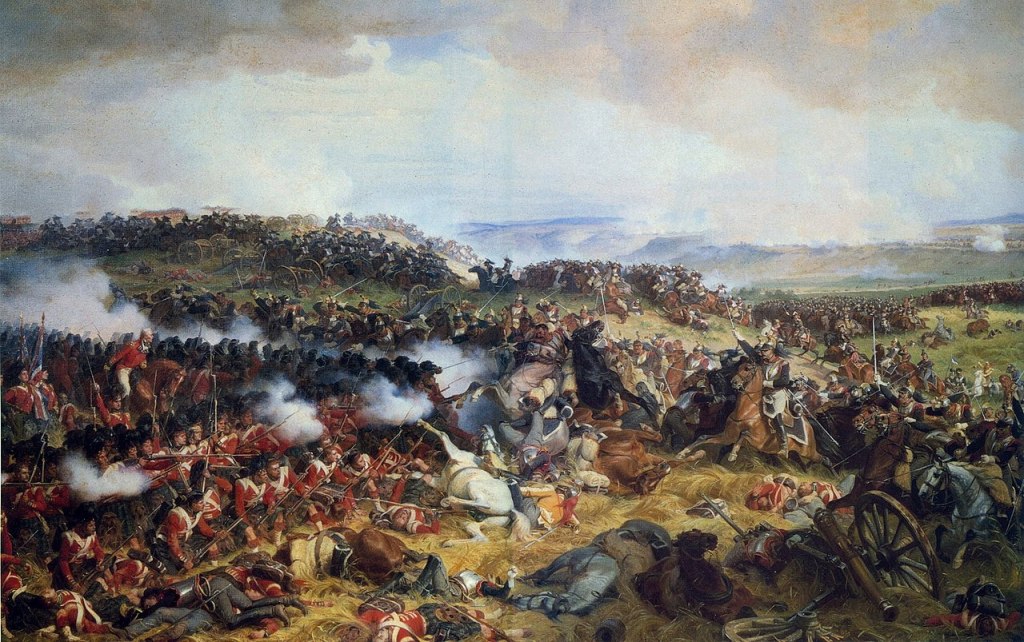
Richard Caton Woodville’s famous painting of the Charge of the Light Brigade. Lord Cardigan on the far left of picture is dressed as the commander of the 11th Hussars. Source: Wikimedia Commons
The 11th Hussars, resplendent in their black fur shakos, blue and gold braided jackets and crimson trousers, formed half of the second rank of the Light Brigade, though that did not spare them and they took a severe mauling from the Russian cannons as the Brigade closed on the enemy line. Private Turner was one of those struck down well before they got there, hit on the left arm by a cannonball, his injury being witnessed by Sergeant Major George Loy Smith of his company, who was riding nearby. Loy Smith later wrote ‘… before we had gone many hundred yards Private Turner’s arm was struck off close to the shoulder and Private Ward was struck full in the chest.’ Another Private named Young had received a similar injury to Turner and Loy Smith told him to turn his horse around and go back to their own lines, ‘… I had hardly done speaking to him, when Private Turner fell back, calling out to me for help. I told him too, to go back to the rear.’
The rest of the brigade rode on down the valley and through the line of cannons where they briefly caused havoc in the rear of the Russian line before exhaustion, the decimation of their ranks and Russian reinforcements forced them to retreat. Turner meantime, must have ridden, or been carried back down the valley to the British lines, bandaged up and with others was then placed aboard a transport ship bound for the military hospital at Scutari in Turkey. However, he never made it, his wound was too severe; Private George Turner aged 25 years old died aboard ship on 28th October and was probably buried at sea.
There was no mention of the fate of Private Turner in the local papers at the time and it took 120 years for his story to finally make the pages of the Sentinel. It was related by Mr W. R. Baker of Endon, who added, ‘I ask your readers to spare a moment’s thought to his memory now when tradition has little meaning and patriotism is an outmoded word I make no apology for thinking that he should not be entirely forgotten.’
There existed, though, another poignant addendum to Turner’s sad tale. Seven months after the battle of Balaclava, the Light Brigade had passed again over the same ground, now deserted of enemy troops and here the upper part of a sabre scabbard, all twisted and mangled, was picked up by Sergeant Major Loy Smith and it became part of his collection of memorabilia. When the collection was put on display in Sheffield in 1981, a card attached to the scabbard’s remains read, ‘This belonged to Private Turner, K.I.A.’
*Despite my best efforts, I have yet to find a trace of a George Turner in the local civil records who fits the available data, raising the possibility that the name is an alias.
Reference: Evening Sentinel, 25 October 1975, p.4; George Loy Smith, A Victorian RSM: From India to the Crimea, p. 132.
My thanks to Mr Philip Boys for kindly providing me with background information on Private Turner contained in ‘Lives of the Light Brigade: The E. J. Boys Archive’.
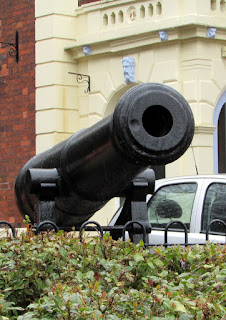
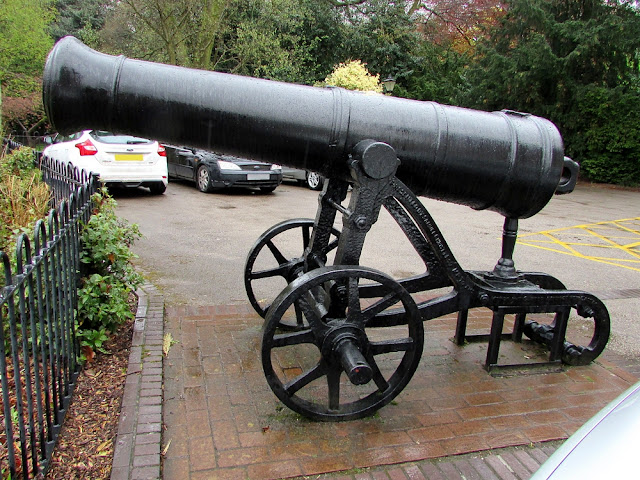
Standing outside of the Brampton Museum in Newcastle-under-Lyme is a large black-painted cannon, mounted on a cast-iron limber. This was one of thousands of similar pieces of war booty brought back from the Crimea, following the fall of the Russian citadel of Sevastopol in 1855. In that city the Allied armies had discovered a large ordnance depot filled with 4,000 damaged or obsolete guns and these along with many of the guns captured during the fighting were later used as ballast on the merchantmen and troopships when they were bringing the army home. The Crimean War (1854-1856), had been a horrendous and utterly pointless conflict and perhaps as part of a wider public relations exercise to calm the national anger at the lives lost and at just how badly the war had been run, these cannon were freely distributed to towns and cities around the country.
Newcastle’s cannon, weighing 2.8 tons is a 36 pounder made in 1840, and was presented to the Borough in 1857 by its then MP Samuel Christy. It was originally situated in Stubbs Walks, opposite the Orme Girl’s School, Newcastle, where it stood until 1965, when it was moved to its current location. Such was the fate of most of these retired instruments of war and in the latter half of the nineteenth century it was no unusual thing to find a large, defunct piece of Russian artillery decorating a municipal park or fronting some grand civic building anywhere in Britain. Today, though, they are not so common; time and necessity have seen many of the others scattered or scrapped over the years and such seems to have been the case with a couple of cannons that came to the Potteries, no trace of which now seems to exist.
Newcastle’s impressive Russia cannon in situ. The carriage was mass-produced at the Royal Armouries in Woolwich.
In his autobiography Past Years, Potteries-born scientist Oliver Lodge, mentioned a close encounter with a Russian cannon in his youth. Lodge recalled that at a very young age his father took him from their home in Penkhull down the steep hill to Stoke where peace celebrations marking the end of the Crimean War were taking place. A captured Russian cannon had been placed in front of the Wheatsheaf Hotel and Mr Lodge told his son to wait by the cannon until he came back for him. Looking up at the monstrous artillery piece, young Oliver wondered what they were going to do with the gun, half fearing but half hoping that they were going to fire it. However, nothing so exciting happened, instead the local dignitaries made several speeches before they all set off for lunch. Oliver’s father went with them, minus his boy, and afterwards in the evening he went home having completely forgotten about Oliver. Only after returning home and being asked by his wife where their son was did he suddenly remember and went dashing off back down the bank to find the lad still obediently standing by the gun, utterly unconcerned at being left alone for several hours after everyone else had departed.
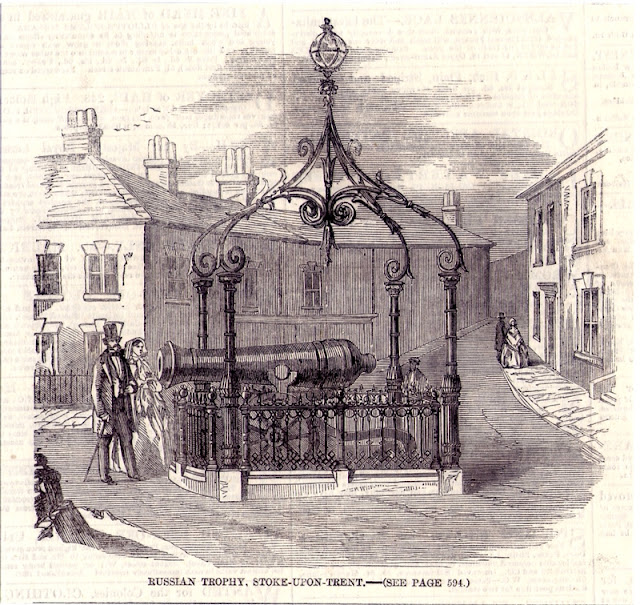
The Victoria History of Staffordshire notes that a Russian cannon was presented to the town by W. T. Copeland in 1857 and erected opposite the Wheatsheaf Hotel in 1858, as per Lodge’s memoirs. In 1858, the Illustrated London News carried an interesting illustration of what was called Stoke-upon-Trent’s ‘Russian trophy’, along with some background information.
‘RUSSIAN TROPHY AT STOKE-UPON-TRENT.’
‘We give a representation of the Russian Trophy as mounted and in closed at Stoke-upon-Trent a few weeks ago. The gun is placed on a stone platform, as shown in the Illustration, in which the Royal arms, in Minton’s tiles, is inserted. On the stone parapet an ornamental railing of a handsome pattern is placed, and at each angle of the square of the platform a pillar in cast iron rises, to carry the wrought-iron scrollwork, which was manufactured by Mr. Haslam, of Derby, and is an excellent specimen of the old art of ironworking, now so extensively superseded by the process of casting. All the ironwork is coloured in imitation of Florentine bronze, and richly gilt in the more decorative parts of the design. The whole is surmounted by a large globe lamp, which forms the principal feature of the construction, as the erection, being placed at the junction of three streets, requires a prominent and well adapted mode of lighting. The trophy was inaugurated by Mr. Alderman Copeland, one of the members for the borough, who also defrayed the expenses connected with mounting the piece. The work was designed and carried out under Mr. Edgar, architect.’
Longton also received a gun, but even less is known about that one. There is a brief note in the Staffordshire Sentinel in 1867 that reads: ‘The same committee reported a resolution, in accordance with a suggestion from the Council, to remove the Russian cannon from the front of the Town Hall to the space within the railings at the front of the Court House… The proceedings were approved, and the recommendation adopted.’ In his Sociological History of Stoke-on-Trent, E. J. D. Warrilow includes a photograph of Longton Court House with the cannon situated behind the railings as described, but a second photo taken in 1950 shows that the gun had been removed. It was resited to Queen’s Park, Longton, where it stood in front of the clock tower. However, it has long since vanished and its current whereabouts are unknown.
Stoke’s gun was also later moved, to a site in Hill Street by the old town hall in about 1874, but what finally happened to this and Longton’s cannon is unknown. The most likely scenario is that the valuable metal was sacrificed to the war effort early in World War Two, and ironically perhaps went on to become part of a more modern arsenal.
Contrast this sad end with that of the Newcastle gun which has achieved a certain status in the area. Between 1919 to 1942, during its time in Stubb’s Walks, the cannon was joined by a World War One training tank as a companion, but the tank was sent to be scrapped during World War Two. When the Crimean gun was shifted from its original site in 1965 some feared that it too was destined to be melted down and contractors arrived to find that some of the pupils from the Orme Girl’s School had hung a notice on the gun – ‘Hands off our cannon’. They need not have worried. Today, the cannon points out over the Brampton Park, providing a striking and novel photo opportunity to visitors to the town’s museum.
Reference: Oliver Lodge, Past Years: An Autobiography (Cambridge, 1931) pp. 22-23. E. J. D. Warrillow, A Sociological History of Stoke-on-Trent, p.385, Illustrated London News, 12 June 1858, Staffordshire Sentinel, 6 July 1867, Victoria History of Staffordshire Vol. VIII., p.180.
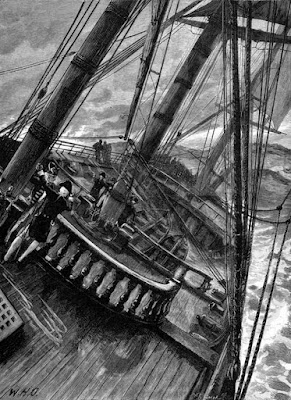
The deck of an 18th century warship. Illustration by W. H. Overend.
Smith Child, later an admiral in the Royal Navy, who also dabbled locally in the pottery industry, was born at the family seat of Boyles Hall, Audley in early 1729, and baptised in the local church on 15 May that year. He was the eldest son of Smith Child of Audley and the wealthy heiress Mary nee Baddeley, whose family had a long Staffordshire pedigree. The Childs by contrast were originally a Worcestershire family, one branch of which had migrated to North Staffordshire, settling in Audley. They had once possessed considerable property, but most of this had been lost by the future admiral’s father, whom local historian John Ward described as ‘a man of polished manners, but wasteful in his habits’. His marriage to Mary Baddeley was therefore quite a coup by which his family inherited several of the Baddeley estates that his eldest boy, Smith, would inherit.
Enjoying the patronage of the politician Earl Gower as well as Vice-Admiral Lord George Anson, young Smith Child was entered the navy in 1747, serving aboard HMS Chester under Captain Sir Richard Spry. He was commissioned lieutenant on 7 November 1755 whilst serving in the Mediterranean aboard the Unicorn under Captain Matthew Buckle, and returned home to become a junior lieutenant aboard the ancient Nore guardship Princess Royal commanded by Captain Richard Collins. He served as a lieutenant on several more ships during the Seven Years War seeing action aboard the 3rd rate HMS Devonshire at the siege of Louisbourg in North America in 1758, then on the much smaller frigate HMS Kennington. Child is said to have also seen service the siege of Pondicherry, India, during 1760-1761.
A distant view of Newfield Hall, left.
After the war ended in 1763, like many officers Lieutenant Child returned home and from this point in his life that he settled down in the Potteries. He erected a large pottery factory in Tunstall, that between 1763-1790 produced a range of earthenware goods. The following year he married Margaret Roylance of Newfield, Staffordshire, acquiring a significant estate from her family. Initially he lived with his wife at Newcastle-Under-Lyme, but the following year he inherited his uncle’s seat, Newfield Hall, Tunstall, a large three-storey house with a five-bay entrance front and seven-bay side elevation, that enjoyed impressive views over much of the Potteries. In 1770, he moved into the hall rebuilding it and in his time on shore cultivated a keen interest in agricultural and other useful pursuits. Here the Childs lived a happy life and raised their five sons: Thomas, who as a midshipman was drowned at sea in 1782; John George whose son later became heir to the family estates; Smith who died without children; and Roylance and Baddeley, whose names recalled their most recent family history. But it was a short interlude in his naval career as at the beginning of what became the American War of Independence in 1775, Smith Child was recalled into service and early in 1777, was sent to take command of the hospital ship Nightingale in the Thames. Later that year he was promoted commander of the store ship HMS Pacific on 30 October 1777, taking the ship out to North America in the summer of 1778.
He was posted captain on 15 May 1780, taking temporary command of the Raisonnable, but in August 1780 in the most important move of his career, Captain Child was given command of the 64-gun HMS Europe and took part in two important sea battles for the control of the strategic Chesapeake Bay. His enemies here would not be American sailors (the American rebels barely possessed a navy), but the French, who had weighed in heavily on side of the Americans, effectively funding and supplying the rebellion in retaliation for the defeat and loss of Canada to Britain in the Seven Years War. As part of Admiral Marriot Arbuthnot’s fleet, Child participated in the Battle of Cape Henry on 16 March in which the British fought off a French fleet attempting to enter the Bay. Positioned in the vanguard of Arbuthnot’s fleet, Europe was one of three ships left exposed by the admiral’s poor tactics, losing eight crewmen killed and 19 wounded to the punishing French bombardment. The British won this round despite their casualties, but the vital waterway would be the scene of one more dramatic fight.
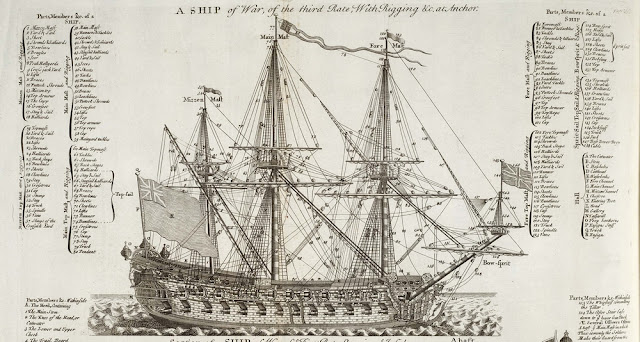
A typical third rate ship of the line like Child’s ship HMS Europe.
This was the Battle of Chesapeake Bay, also known as the Battle of the Virginia Capes, fought against a slightly larger French fleet on 5 September 1781, when HMS Europe along with the 74-gun HMS Montagu, formed the leading part of the centre division of Admiral Sir Thomas Graves’ fleet, and was heavily involved in the fighting that ensued. These two ships suffered considerable damage in the intense two-hour battle. Child’s report after the battle lists numerous masts and spars damaged or shot through, twelve shots struck the hull while there was much damage to the upper works, including splintered decking and fife rails at the base of the masts broken to bits; the rigging and shrouds were also badly cut up and three gun carriages had been damaged, one beyond repair. Europe had taken a pounding, ‘the ship strains and makes water’ Child’s report noted. There was a human cost too, nine members of her crew were killed in the action, and a further 18 wounded.
Outgunned and battered by the encounter, the British fleet eventually withdrew from the action, finally losing control of the bay and the ability to keep their ground troops supplied with food and ammunition. This sorry state of affairs soon after resulted in the Franco-American victory at Yorktown, the knock-on effect of which saw the withdrawal of British forces from the war and Britain’s eventual recognition of the newly-founded United States of America. This outcome was no discredit to Smith Child, though, who had fought well and his standing in the navy enabled him to obtain preferment for most of Europe’s officers when the ship returned home and was paid off in March 1782.
Peace was declared in 1783 and for the next six years Smith Child served at home. However, on the continent, more trouble was brewing when in 1789 the French Revolution broke out across the channel. Though confined to France, the bloody revolution would be the catalyst for a renewed bout of Anglo-French rivalry that started in 1792, when after defeating an invading Prussian led army at Valmy, the new French Republic launched an invasion of the Netherlands. The next year the deposed French King Louis XVI and his wife Marie Antoinette were executed which caused outrage amongst the royal families and governments of Europe and brought Britain into the coalition that had formed to defeat the Republic. With a new war to fight, the Royal Navy – now a much fitter beast than during the American war – was again expanding and called in many of its old officers to fill in the gaps; this included Smith Child.
After serving for some time in the Impress Service at Liverpool, in November 1795, Smith Child was given command of the HMS Commerce de Marseille, a huge French-built ship that had been surrendered to the Royal Navy in the 1793 Siege of Toulon. The ship, originally a 118-gun three-decker, at first seemed well built like most French vessels and an early report stated that she sailed as well as a frigate, but her construction gave the ship an unacceptably deep draft while her internal framing was found to be inadequate for the high seas and the hull suffered serious strain when sailing. Deemed unworthy of a major overhaul, the vessel had been quickly downgraded and remained languishing at anchor at Spithead until the autumn of 1795. She then underwent a partial repair, and was armed and equipped for sea. Shortly afterwards, however, the guns on her first and second decks were sent on shore again, the redundant gun ports were sealed up and she was converted to a store and transport ship. The ship was then loaded with 1,000 men and stores for transport, drawing a whopping 29 feet when fully laden. The ship was tasked as part of a large convoy of some 200 transports escorted by 8 ships of the line under Rear Admiral Christian, that was supposedly on a secret mission to the West Indies that would soon become much less secret after the disaster awaiting it off shore.
Child’s ship was in poor condition before sailing and she was damaged beyond repair when shortly after the fleet had set out, on 17 and 18 November the English Channel was struck by a violent storm of nigh on hurricane strength. This sent Admiral Christian and his escort squadron running to Spithead for cover while the transport fleet was scattered, some sinking, others being driven ashore and wrecked. Some two hundred bodies were washed ashore after the storm and the fleet was left so disordered that it was not ready to make another attempt until early December, which was again battered by a fearsome storm. The Commerce de Marseille, though, would not be among them, because as a result of the first storm, ‘… this castle of a store-ship was driven back to Portsmouth; and, from the rickety state of her upper-works, and the great weight of her lading, it was considered a miracle that she escaped foundering. The Commerce-de-Marseille re-landed her immense cargo, and never went out of harbour again.’
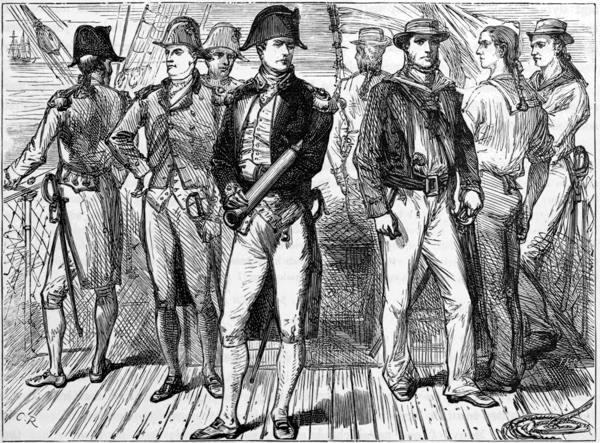
18th Century naval officers and crewmen.
Child had commanded his last ship and after such a clunker he was perhaps glad of it. He was promoted to Rear Admiral on 14 February 1799, but it was a nominal rank and he apparently saw no further sea service. Subsequently promoted to Vice Admiral on 23 April 1804, and Admiral of the Blue (the junior position in the rank of full admiral) on 31 July 1810.
At home, as well as being a noted pottery manufacturer, Admiral Child served at times as a Justice of the Peace for Staffordshire, a Deputy-Lieutenant of the county, and was a highly respected member of the local landed aristocracy. He died of gout of the stomach on 21 January 1813 at Newfield aged 84, and was buried in St. Margaret’s Church, Wolstanton, under a plain tombstone. His son and heir John had died two years previously, so Smith Child’s estate passed to his five year-old grandson who would later become the Conservative M.P, and noted philanthropist Sir Smith Child.
Reference: The Graves Papers and Other Documents Relating to the Naval Operations of the Yorktown Campaign, July to October 1781, (New York, 1916) p. 67 and p.73. William James, The Naval History of Great Britain, Vol.1 (London, 1837), p.253. John Ward, The Borough of Stoke-Upon-Trent (1843) pp. 85-86.
In 1997, Hugh Troth of Ohio, published a tribute to his grandfather, The Life and Times of Isma Troth. Isma Troth had served as a soldier in the American Civil War and he wrote several letters charting his friendship with a fellow soldier named John Livesley whom he met in hospital when he was there recovering from his wounds. Troth’s account indicated that Livesley came from Potteries and using biographical information from this book and information from other social archives, local researchers were able to piece together the life of this otherwise forgotten local who had somehow got himself involved in a foreign war.
John Livesley was born in Shelton on 12 October 1838, the son of pottery engraver and journeyman William Livesley and Sarah nee Brundrett. He enjoyed a privileged upbringing as his father was an increasingly prosperous man, who by 1851 had opened his own pottery and also ran a grocery business, all together employing 46 men, 23 women, 20 boys and 25 girls. As a result of his family’s wealth, John enjoyed a good education, attending a boy’s boarding school run by James and Harriet Grocott at Wilton House, Wrinehill near Betley on the Staffordshire border.
As the family business grew, William Livesley entered into partnership with one Edwin Powell, and his name then regularly appeared in the local press, often for his philanthropy and support for public works and by the mid-1850s, John Livesley or J. Livesley likewise puts in a few appearances, attending performances or contributing money for some good cause supported by his father. But by 1861 census John had disappeared from the area.
In fact, he had left the country and crossed the Atlantic to the United States, sailing in September 1860 aboard the RMS Persia to New York in company with 40 year old James Carr, a native of Hanley who two decades earlier had emigrated to the States and had established a successful pottery in New York. Both men give their occupation as ‘potter’ in the ship’s passenger list and it is not unreasonable to suppose that John Livesley, the son of a successful Hanley manufacturer had gone over with John Carr to work in his growing firm.
Yet, it was a bad time to be travelling to the USA as growing tensions between the northern and southern states over the expansion of slavery, came to a head the following year. The southern slave-owning states split from the Union, forming a Confederacy, an act that pushed the country into a bloody civil war.
Was John Livesley permanently settled in the States at this time, resisting the urge to join in the conflict, or just an occasional visitor to the country, criss-crossing the Atlantic and thus avoiding becoming involved? It is hard to say, but he was certainly in New York on 23 January 1864 when he was enlisted as a private in L Company 6th Regiment New York Cavalry of the Union army. Details on his enlistment are unclear, but suggestions have been made that he was drunk at the time, a not unlikely hypothesis as John seems to have had a habit of drinking to excess when he found himself in like-minded company. This is backed up by records that show that he was in hospital for the first week of his service due to “delirium”. He also seems to have enlisted under an assumed name, the enlistment records for John Livesley being struck through and replaced with the name ‘John Lindsley’. The records note that he was born in England, worked as a potter and gave a physical description: ‘gray eyes, brown hair, light complexion, 5 feet 8½ inches in height’. His term of enlistment was given to be three years.
His new home, the 6th New York Cavalry, also known as the 2nd Ira Harris Guard, was a veteran unit, it had been formed at the outbreak of the Civil War and seen much service. Only a few months earlier it had taken part in the Battle of Gettysburg and since then played its part in numerous smaller actions taken on by the Army of the Potomac to which it belonged. With the onset of winter though it had gone into cantonments and when John Livesley enlisted, was employed in guarding the country between the Union lines and the Blue Ridge Mountains.
US and Confederate cavalry in action at the Battle of Trevilian Station in 1864.
On 3 May 1864, the regiment – now with Livesley, or rather ‘Lindsley’ in its ranks – returned to action, crossing the Rapidan river and taking part in the Wilderness campaign under General Grant. The regiment was part of the Cavalry Corps, and played a role in all the operations undertaken by the corps commander General Sheridan, notably in his famous raid around the Confederate capital of Richmond. At the battle of Yellow Tavern on 11 May 1864, the 6th New York Cavalry charged down the Brook Pike and went into and entered the line of the first defences about Richmond, being the first Union regiment to get so close to the city. The regiment then saw action in the Battle of Trevilian Station, and in numerous smaller actions and it was probably during one of the latter in August 1864 that John Livesley was badly wounded eight months after joining up.
Carried from the front and admitted to the USA Post Hospital, Bolivar Heights, Harper’s Ferry on 20 August with gunshot wounds, Livesley was a wreck and had to have an arm and a leg amputated. Records show that aside from his physical injuries, he like many in the army was also suffering from chronic diarrhoea, but also that he was quickly transferred further from the seat of war, first to the Field Hospital at Sandy Hook, Maryland and finally to Rulison USA General Hospital at Annapolis Junction, Maryland on the road between Washington and Baltimore. Confined to a wheelchair, it was during his long convalescence here that he met Isma Troth, a former prisoner of war at the infamous Andersonville prison, who now worked as a clerk at the hospital, often writing letters home for the wounded, one of them being John Livesley whom he first met shortly after his arrival there. The two men developed a close friendship and Livesley’s father offered to pay for the two of them to come to England when they were discharged. The war effectively ended in April 1865 and John was mustered out of the Union army on 24 May 1865 whilst still at Annapolis Junction.
Cheered by the thought of making a new life for himself, Troth was keen to go to Britain, noting that his friend’s family were influential and he might secure a good position there, but he had some major misgivings about Livesley’s drinking habits. In a letter written in June that year, Mr Troth wrote: ‘Mr Livesley is a good, kind friend of mine and is an honest, intelligent man – but he sometimes drinks’. He noted that he had known Livesley for about a year and that the man was not a regular drinker and he never drank when they went places, but on a couple of occasions he had gone out with soldiers who did drink and had come home in quite a state. Once he went with them to a neighbouring village and came back the worse for wear, and on being mustered out of the army he had gone out ‘with some fast boys’ to celebrate his release and had come back drunk, much to Troth’s disgust. After talking of their plans to travel to Britain, Isma said: ‘If my friend associates and drinks with these rough characters I shall not go with him, for I cannot place any confidence in a drunkard.’
Despite these problems, the two friends did indeed take passage to Britain and Isma spent a year in England before travelling home. John returned to Stoke-on-Trent and was soon set up as a grocer in Lichfield Street, in Hanley, marrying a local girl Ellen Twigg from Bucknall on 18 June 1867. But tragically John Livesley died just four months later, on 23 October 1867, aged 29, his cause of death being given as epilepsy.
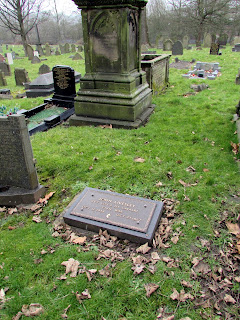
Despite his father’s wealth John was buried in an unmarked grave in Hanley Cemetery. However, when he learned of his grandfather’s link with John Livesley, Hugh Troth endeavoured to see John’s service recognised and in 1997 contacted the United States Government to obtain a bronze plaque, recognising Private John Livesley’s service during the American Civil War. In 2003, the plaque was put on his burial spot, being unveiled by Mr Troth.
Reference: Hugh Isma Troth, The Life and Times of Isma Troth (1997)
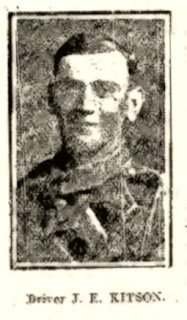
John Edward Kitson was born at Coseley, near Dudley, Staffordshire in 1897, the eldest of two children born to Edward and Florence Kitson. His father was a police constable at first in the Dudley and Handsworth regions, but it seems that promotion to sergeant saw him move north to the Potteries, perhaps before John was 10 years old. Here the family prospered and his father would eventually rise to the rank of Chief Inspector at Burslem Police Station. In the 1911 census, the family was living in Shelton New Road, Newcastle and barring service in World War One, John Kitson would remain in the area for the rest of his life.
The Great War started late in 1914 and by early 1915 John Edward Kitson had joined the army. As 31331 Gunner J. E. Kitson, Royal Field Artillery, he arrived in France in March 1915 and from April 1916, he served as a driver for X/9 Medium Trench Mortar Battery, part of the divisional artillery attached to the 9th Scottish Division. Though never promoted, he proved a brave soldier, being wounded in action at least four times, seeing service on the Somme and at the Battle of Passchendaele. Gunner Kitson finished his war by winning the Military Medal in 1918 for gallantry in the field. Hospitalised in Britain after his final wound, he did not return to the front to see out the war, being discharged from the army on 8 July 1918.
After the war he married a local woman, Doris Hudson, they settled in Sneyd Green where they brought up five children. Kitson worked as a civil servant for the Ministry of Labour, but this seems to have been an anti climax after his wartime adventures which prompted him to leave an interesting anecdote of his service during the war and a record of how his injuries had affected his life afterwards. The stories were colourful enough to warrant syndication on papers as far afield as Australia and New Zealand.
‘A WAR HORSE’ ‘ALMOST HUMAN.’
‘Mr. J. E. Kitson. of Hanley, Staffordshire, in England, sent to the “Daily Mail” the following remarkable stories of his war horse: – During 1916 and 1917 I had a charger named Tommy. He was nothing short of human, and many an entertainment was given by him to the troops. Once, when we were being shelled he got loose from his peg, and coming to me, gripped my shoulder In his mouth and “led” me away. A minute later a shell fell at the very spot where I had been standing. His favourite trick was to wait until I had given him a thorough grooming, then sit down like a dog. open his mouth, and “laugh” and roll. This usually happened when the Inspecting officer was just coming round the lines. Luckily, the officer knew Tommy. Another time, when I was riding him at a gallop my tin hat fell off. Tommy at once stopped, turned. and picked it up and “handed” It to me. Just as I had put the hat on a piece of shrapnel struck it a glancing blow. He brought me in when I was badly gassed, I was unconscious on his back. A few weeks later he also entered hospital, and was sent into retirement.’
The Mercury (Hobart, Tasmania) 2 July 1931, p.12
‘MAN WHO REFUSES TO DIE’
‘Mr J. E. Kitson, of Hanley Road, Sneyd Green, Hanley, Stoke-on-Trent, is known to his family and friends as the man who refuses to die. Doctors have repeatedly told him he has only a few years to live – but he fools them all. It all started during the war, when a piece of shell pierced his neck and killed a comrade behind him. Mr Kitson recovered, but doctors gave him just five years of life.
The five years went by; then two years later he collapsed at work. This time he was given just seven months more. But after five months he got fed up with being a sick man and returned to work.
Two years ago he collapsed again, was rushed to hospital and put on the danger list. Two hours later he was normal again and walked out of the hospital the next day.
Doctors are perplexed about Mr Kitson, but he doesn’t mind. He says he will live to be 100.’
Cairns Post (Queensland, Aus.) 15 March 1939, p.9
John Edward Kitson certainly defied his doctors by many years, but did not carry on going as long as he predicted and he died on 13 July 1953 in Stoke-on-Trent, Staffordshire, when he was 56 years old.
During the First World War, the action for the most part took place along a line of trenches stretching from the. Belgian coast, down to the Swiss border, where massed armies, huddled in their trenches, were launched in pointless attacks in the face of merciless machine gun and cannon fire. For the civilians back home the war was distant, though those left at home may have had relatives in the trenches, the Great War was an impersonal thing. True, foodstuffs were in short supply, and women took a great leap forward in society by going to work in the factories and on the farms, but the prospect of imminent death from enemy bombers, was still a generation away, or so it seemed. Then there came the Zeppelins. In a bold move, the Germans attempted to disrupt British life and industry, by sending over fleets of hydrogen-filled airships to drop bombs on anything they thought worthy of being destroyed. Two of these airships, at least, made it as far as North Staffordshire, and though the damage they did was insignificant, the authorities fell that they were such a threat to British morale, that the circumstances of the raids were not fully reported until a month after the war had ended.
The first raiders came on the night of the 31 January 1916, Several cities throughout the Midlands were surprised to find airships over them, since few had thought that the area was within the radius of such craft. This was in the days before the blackout, and the major manufactories of the Midlands were a blaze of lights and fires, and in North Staffordshire, the glow was particularly noticeable from the pot banks and steel-works of Stoke on Trent, which were obscured only by a slight ground mist.
A squadron of Zeppelins had crossed the coast that night. One attacked Walsall at 8.10 p.m., and later at 12,30 a.m. There, the Mayoress, Mrs. S. M. Slater, was fatally injured in a bomb blast. The Wednesbury Road Congregational Chapel was demolished by a bomb and other unspecified damage was done. At 8.30, another airship suddenly loomed out of the dark over Burton on Trent, and dropped a cluster of bombs, one of which fell on a mission house, where a clergyman’s wife was holding a service, and in the blast three of the congregation were killed and a forth fatally injured.
Not long after the Zeppelin over Burton had begun its attack, engines were heard moving towards Trentham and the Potteries, and presently, the Zeppelin appeared, cruising slowly overhead. Its obvious target could be seen miles away, the light from the Stafford Coal and Iron Company’s blast furnaces. The raider circled the foundry like a vulture and dropped half a dozen bombs in close succession. However, these fell on the spoil banks between the colliery and the furnaces, where they made several large holes, but did no serious damage.
German airship designer Count Zeppelin
After that the elusive raider sneaked off. Its course was only a matter of speculation, though engines were heard over Hanley, then Wolstanton and as far west as Madeley, where it dropped a flare over open country. It’s raid, though it must have injected some excitement into the area, caused no harm and it must have used up its stock of bombs, or been searching for a secondary target.
The second Zeppelin raid, though, was more dramatic, and took place during the night of 27 to 28 November 1916. It was a clear, dry night over the Midlands, there was the nip of an autumn frost in the air, perfect weather for an air raid. So, perhaps, at 10.45 p.m.. when the warning was received in the Potteries that Zeppelins had been sighted, few were surprised. The whole district was blacked out. and air raid precautions were put in place the special constabulary, the fire brigade and doctors and nurses were all alerted and went to their stations. Positive information was soon received that a raider was making for North Staffordshire, and at a few minutes before 1 a.m, the steady drone of aero engines was heard and the Zeppelin was sighted over Biddulph, slowly making towards the Kidsgrove-Goldenhill-Tunstall area of the Potteries. Then the bombs came crashing down.
One unnamed witness, had been up late and was just going to bed at about 1 a.m., when he heard a ‘deep rumbling, long-sustained explosion’ and thought that there had been a serious colliery accident nearby. He went into another bedroom to ask if anyone else had heard the noise, when there were further explosions, two short sharp blasts, then another ‘accompanied by a rending sound’, then a series of four or five blasts in succession. The witness looked out of a bedroom window and caught sight of flashes off towards the Chesterton area, followed by the thudding boom of the detonations. The bombardment went on for about half an hour until the Zeppelin drew nearer to the witness’ house and dropped another bomb about half a mile away ‘that shook every brick and window in the house’, before it moved. The witness had counted 21 explosions.
The first bomb blew a hole in a spoil bank at Birchenwood Colliery, Kidsgrove, while the second two landed not far off from the Goldendale Iron Works. The forth landed in Tunstall, impacting in the back yard of No. 6 Sun Street, and the explosion destroyed the sculleries and outhouses of Nos. 2, 4, 6 and 8, but shards hit other houses, as well as a nearby Roman Catholic church. Luckily, no one was killed and only one person was injured, a Mr Cantliffe of No. 8 Sun Street, who was hit in the chest by shrapnel, but he later made a full recovery in the North Staffordshire Infirmary. Had the raider circled in that area for a time, there is little doubt that there would have been a great deal of destruction and many more casualties, but the Zeppelin moved on, leaving Sun Street battered and bruised and in such a state that it would for days attract a horde of sightseers.
The Zeppelin cruised over Tunstall and out across Bradwell Wood, where the burning mine hearths seem to have attracted the raider away from the areas of population. This area was just a mass of calcinating ironstone left to smoulder out in the open, but which obviously seemed to have given the impression of being an ironworks of some description. Certainly the Germans thought so, and the area was heavily bombed, watched from a distance by our nameless witness. Explosion after explosion reverberated over Chesterton, but the only damage done was to a shed that was knocked over and the closest that any other bomb got to the public, was when one of the last of these landed behind Bradwell Lane, Wolstanton. A later report summed it up succinctly as a ‘particularly futile’ attack on the area.
As it had circled over Bradwell Wood and the area around Chesterton and Wolstanton for some time, illuminated in the flashes from the bombs, many locals had spotted the airship. But finally, spent of its bomb load, the raider turned south-east and was last sighted passing low over Blurton Farm coming from the direction of Hartshill. This was at 1.35 a.m., the Zeppelin then vanished into the dark at a ‘moderate speed’.
There had been a number of bombing raids over Britain that night and many came to a grim end. Certainly the North Staffs raider never made it back to Germany. Lord French, reporting the fate of several of these Zeppelins in a communique, made special reference to the airship that had bombed the Tunstall area. It appeared that after leaving the North Midlands, the airship hail taken a direct route towards East Anglia, from where there was but a short stretch of sea separating her crew from their homeland. However, before she even reached the coast, the Zeppelin had been repeatedly attacked by aeroplanes of the Royal Flying Corps and by ground-based artillery. Perhaps she was damaged, since Lord French’s report noted that the last part of her journey was made at a very slow speed and the airship was unable to reach the coast before day was breaking. By the time she reached Norfolk, however, it seemed that the crew had managed to make repairs, and after running a gauntlet of coastal batteries, one of which claimed a hit, the Zeppelin was seen making off to the cast at a high speed and at an altitude of about 8,000 feet. But more planes came at her. About nine miles out at sea, the Zeppelin was attacked by four machines of the Royal Navy Air Service and further fire came from an armed trawler. Worried like a bear with terriers at her heels, the airship struggled on until gunfire ripped into her hydrogen filled body and she went crashing down in flames into the sea at about 6.45 a.m. No survivors were noted.
Reference: Staffordshire Sentinel, Friday, 27 December 1918, p.4
Following the British invasion of the independent Zulu Kingdom in Southern Africa in January 1879, a force of over 1,700 men, mostly from the 24th Regiment of Foot, was camped at the foot of a sphinx-shaped rocky hill called Isandlwana. Here on 22 January, they were attacked by a Zulu army some 20,000 to 25,000 strong that they had supposed to be many miles away. As the Zulu warriors swarmed down from hills to the north and spread out in a wide arc to envelope them, the 24th Foot and numerous colonial units moved forward and formed a line to face the enemy and for some time – in the centre at least – they did successfully hold their ground, keeping the Zulus at bay with concentrated volley and cannon fire. In trying to keep in contact with a mounted force to the east, though, the main British line became fatally over-extended and in danger of being outflanked. Seeing this, Colonel Pulleine the officer commanding the camp ordered his forces to fall back to a more defensible position in front of the hill, but it was a fatal move. When the gunfire slackened the Zulus in the centre seized the moment and rushed forward in pursuit while those out on the plain soon outpaced and outflanked the British line to the east, rushing in on the camp and behind the retiring blocks of infantry, cutting off their escape. Chaos ensued as the British line disintegrated and the battle then degenerated into a mass of isolated fights with knots of redcoats surrounded by masses of Zulus. Some 400 men, mostly mounted troops, managed to escape the resulting slaughter before the end, but over 1,300 men perished on the British side, including nearly the entire 1/24th and a company of the 2/24th Foot. The Battle of Isandlwana became the worst defeat ever suffered by the British army at the hands of a native foe and for the time at least it effectively stopped the invasion of Zululand in its tracks.
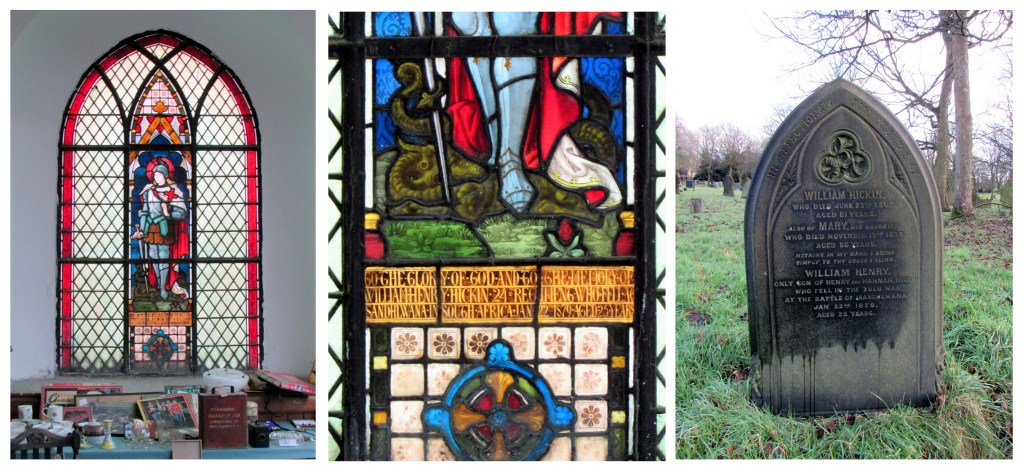
The stained glass window and grave memorials to Private William Henry Hickin.
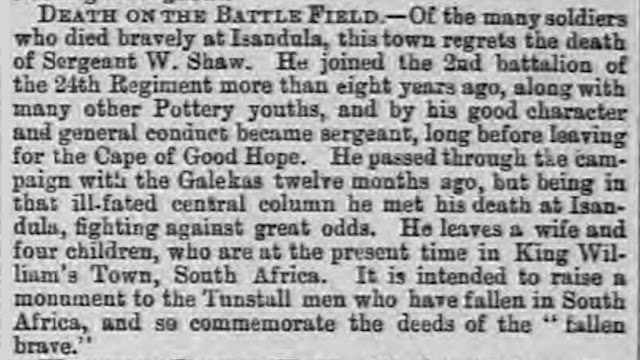
Several local men were killed in the action. In the ranks of the 1/24th were 25 year old Private William Henry Hickin from Hanley; the son of one Henry Hickin a local locksmith and bell hanger, William had previously worked as a writing clerk before enlisting in early 1876. Private George Glass 1/24th aged 22 from Shelton, was the son of a local school master and had briefly worked as a potter and joined the army in 1874. Private Enoch Worthington 1/24th from Kidsgrove, was 24 and had been a miner like his father before him; he enlisted in Newcastle in 1875. Private Samuel Plant 1/24th was an older man from Shelton, who had joined the 24th Foot in 1859, married in 1862 and prior to serving in Southern Africa he had served for a year on St Helena.
In the 2/24th, former potter Sergeant William Shaw from Tunstall, was about 32 years old. After joining the army in 1870 he was promoted corporal in 1873 and sergeant in 1877. He had married locally before joining the army, had four children and had served in India and Britain before being sent to Southern Africa. His wife Emma and their children had come with him on this tour of duty and were lodged in King William’s Town, Cape Colony, far away from Zululand. Private Samuel Poole, 2/24th is something of an enigma as several possible candidates of that name were born in Audley, Kidsgrove or Newcastle, but there is no clear evidence if any of these are our man, all we know is merely that a man of that name enlisted in Hanley on 27 April 1875 aged 21 years. Records state that he served in G Company 2/24th. Private David Pritchard 2/24th, was from Stoke-upon-Trent though no one of that name appears in the civil records so that may have been an alias. He claimed to have worked as a forgeman before joining up in 1865 and he went on to see service in India. Aged about 34 at the time of the Zulu War, records say he served in B Company, but that was the company left at Rorke’s Drift, so he had probably been transferred to G Company.
The most interesting of these local victims of Isandlwana from a historian’s point of view, is Sergeant William Shaw of the 2/24th, as evidence exists giving us a glimpse into his fate that day. According to the notebook of Corporal John Bassage 2/24th, now held at the Royal Regiment of Wales Museum, who was part of the force sent to bury the dead in June 1879 after the war was over, the remains of Sergeant Shaw and three private soldiers of the 2/24th were found together in a heap on the battlefield. The four men caught out in the open appeared to have formed into a small group in a last desperate attempt to try and fend off the Zulus as they poured into the camp. All seemed to have been stabbed to death with assegais.
Staffordshire Sentinel and Commercial & General Advertiser – Saturday 8 March 1879, p.5
In a report in the Sentinel noting Shaw’s death in action, it was stated that there were hopes of raising a memorial to him and all the Tunstall men killed in South Africa. This, though, never seems to have come to pass and of all the men mentioned above only one appears to have been commemorated locally. In December 1880 at St John’s Church in Hanley, a stained glass window was dedicated to the memory of 25 year old Private William Henry Hickin, whose father was a churchwarden there. Hickin was further commemorated on his grandfather and aunt’s gravestone in Hanley Cemetery. Private Hickin is in fact the only ‘other ranks’ casualty of the Battle of Isandlwana remembered with a memorial window.
One other local soldier who who was initially listed as a casualty was Private Frederick Butler from Shelton and son of the proprietor of the Bell and Bear Inn. He was a soldier of the 1/24th but prior to the invasion he had been transferred to the Imperial Mounted Infantry, Though initially listed as a casualty of the battle, Butler was in fact many miles away with his new unit serving in another invasion column that saw action at the battle of Nyezane on the same day as Isandlwana. He survived the war, rejoined his own unit once the fighting was over and later returned to the Potteries.
Reference: Staffordshire Sentinel, various issues March-May 1879. My thanks to Ken Ray for his detailed list and information on the local men killed at Isandlwana and to Alan Rouse for family and background information on Sergeant Shaw.